Tam ekran görüntülemek için görsele tıklayın

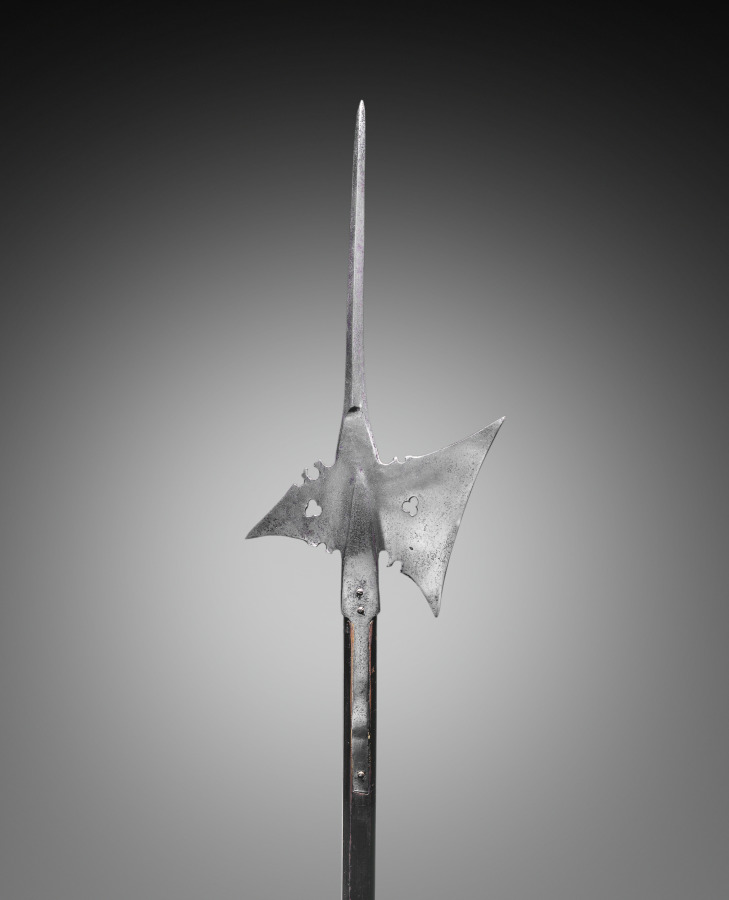
Teber
✓ Özgünlük güvencesi · ✓ Uzman kondisyon raporu · ✓ Sigortalı dünya çapında teslimat · ✓ Özel odada inceleme
The most effecient weapons used by the infantry (foot soldiers) during the 15th and 16th centuries were pole arms (or staff weapons). The halberd, like the examples shown here, was a weapon of great versatility. The word <em>halberd</em> comes from the German words Halm (a staff) and Barte (an axe). The halberd is, in fact, an axe mounted on a long pole with a very specialized shape and function: the axe blade was used for hacking, the spike for thrusting, and the beak either for piercing plate armor or for pulling a knight from his saddle. Used by shock troops, the halberd was the weapon of choice for Swiss and German mercenaries. From about 1550 onward, the halberd underwent major changes. Its distinctive outline became exaggerated and its functional elements evolved into purely ornamental shapes. The halberd's large blade conveniently provided space for armorial devices. By the late 1500s, it became a ceremonial weapon favored by princely body guards. It is still carried today by the Swiss Guard at the Vatican.
| Sanatçı / Usta | Germany |
|---|---|
| Tarih | c. 1550 |
| Kültür / Köken | Almanya |
| Malzeme / Teknik | Çelik, Bord trefoils ile; ahşap haft (Planlanmış köşelerle birlikte) |
| Ölçüler | Overall: 200.7 cm (79 in.); Blade: 25.4 cm (10 in.) |
| Bölüm | Ortaçağ Sanatı |
| Tür | Silah ve Zırh |
Sanatçı Hakkında
Provenans & Kaynak
Belgelenmiş provenans bilgisi talep üzerine paylaşılır.
Kondisyon
Ayrıntılı kondisyon raporu ve yüksek çözünürlüklü fotoğraflar satış öncesinde uzmanlarımızdan temin edilebilir.
Teslimat & Teslim Alma
İklim kontrollü, tam sigortalı sanat eseri taşımacılığı; randevu ile elden teslim.
Sanat Koleksiyonu'ndan Satın Almak
Kayıt olun, kimliğinizi doğrulayın ve çevrim içi ya da özel odada teklif verin. Alıcı komisyonu ve vergiler onaydan önce gösterilir.


