Tam ekran görüntülemek için görsele tıklayın

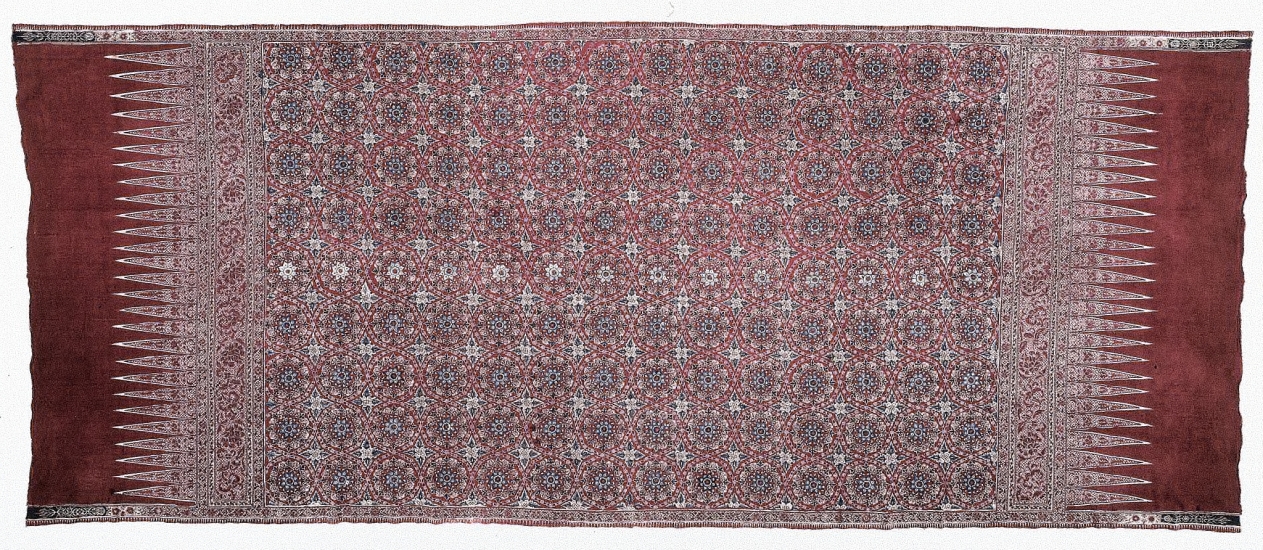
Oversize Hip (tapis)
✓ Özgünlük güvencesi · ✓ Uzman kondisyon raporu · ✓ Sigortalı dünya çapında teslimat · ✓ Özel odada inceleme
This colorful, elegantly patterned cloth was made in India for export to Indonesia in the East-West spice trade of the Dutch United East India Company. On the island of Sumatra such cloths, worn by both men and women, acquired ceremonial status, sometimes with magical and religious connotations. The pattern influenced local textile production, especially the heading at each end with triangles (<em>kepala</em>) on the deep red ground. The rich colors were a renowned hallmark of Indian cotton textiles, coveted in both Europe and the East. The Indian expertise in mordant patterning and dyeing was based on centuries of experience that foreigners sought in vain to duplicate. In 1734 a Frenchman, M. de Beaulieu, documented 11 stages of the labor-intensive process. It included applications of mordants (chemicals that fix dyes) that reacted in dye baths to produce specific colors; wax to keep desired areas white and dyed areas protected in subsequent dye baths; and bleaching in dung baths to lighten the ground.
| Sanatçı / Usta | Anonymous, mid-18th Century |
|---|---|
| Tarih | mid-1700s |
| Kültür / Köken | Hindistan, Coromandel Coast, 18. Yüzyıl |
| Malzeme / Teknik | pamuk; düz weave; çizilen direndi, boyandı, boyandı |
| Ölçüler | Overall: 296 x 120 cm (116 9/16 x 47 1/4 in.) |
| Bölüm | Tekstil |
| Tür | Tekstil |
Sanatçı Hakkında
Provenans & Kaynak
Belgelenmiş provenans bilgisi talep üzerine paylaşılır.
Kondisyon
Ayrıntılı kondisyon raporu ve yüksek çözünürlüklü fotoğraflar satış öncesinde uzmanlarımızdan temin edilebilir.
Teslimat & Teslim Alma
İklim kontrollü, tam sigortalı sanat eseri taşımacılığı; randevu ile elden teslim.
Sanat Koleksiyonu'ndan Satın Almak
Kayıt olun, kimliğinizi doğrulayın ve çevrim içi ya da özel odada teklif verin. Alıcı komisyonu ve vergiler onaydan önce gösterilir.