Tam ekran görüntülemek için görsele tıklayın

Dua Niche (Mihrab)
✓ Özgünlük güvencesi · ✓ Uzman kondisyon raporu · ✓ Sigortalı dünya çapında teslimat · ✓ Özel odada inceleme
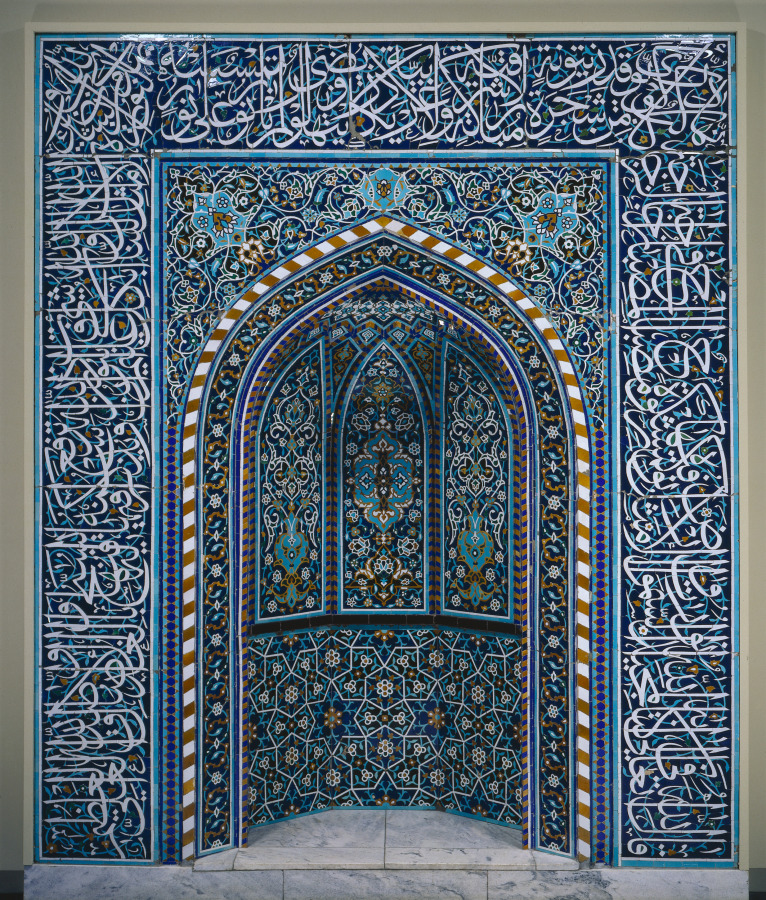
The prayer niche (or <em>mihrab</em> in Arabic) is the focal point in the interior of a mosque, located in the <em>qibla</em> wall that faces Mecca, the holy city of Islam. Verses from the holy Qur’an, written in a form of Arabic script called <em>thuluth</em>, surround the mihrab. The inscription is rendered with white glaze, while the continuous arabesque vine behind the Qur’anic text is executed in gold, turquoise, and green—the color of the Prophet Muhammad and of paradise.<br> <br>The inscription is from the Chapter of Light (<em>Surah An-Nur</em>): “Allah is the light of the Heavens and the Earth. His Light is like a niche in which is a lamp—the lamp enclosed in glass—the glass, as it were, a glistening star; lit from a blessed olive tree, neither of the East nor of the West, whose oil would almost glow, even though fire touched it not. Light upon light! Allah guides whom He will to His light, and Allah sets forth parables for men, and Allah knows all things.” <br><br>The artistic and calligraphic styles suggest this mihrab was made about 1500, but the physical appearance of the ceramic mosaic pieces does not. The glaze colors are too consistent, and they have not discolored from moisture seeping behind the cut tile edges. Clay substrates of the tiles were tested in 2001 using thermoluminescence to determine the date the tiles were fired. The results indicated that the tiles were modern, made between 1941 and 1961, and they are under further examination.
| Sanatçı / Usta | Iran, Isfahan, in the style of the Safavid period (1501–1722) |
|---|---|
| Tarih | c. 1500s or mid-1900s |
| Kültür / Köken | İran, Safavid döneminde (1501-1722) |
| Malzeme / Teknik | seramik mozaik |
| Ölçüler | Mihrab: 290.7 x 245.3 cm (114 7/16 x 96 9/16 in.); Frieze: 69.2 x 1563.5 cm (27 1/4 x 615 9/16 in.) |
| Bölüm | İslam Sanatı |
| Tür | Seramik |
Sanatçı Hakkında
Provenans & Kaynak
Belgelenmiş provenans bilgisi talep üzerine paylaşılır.
Kondisyon
Ayrıntılı kondisyon raporu ve yüksek çözünürlüklü fotoğraflar satış öncesinde uzmanlarımızdan temin edilebilir.
Teslimat & Teslim Alma
İklim kontrollü, tam sigortalı sanat eseri taşımacılığı; randevu ile elden teslim.
Sanat Koleksiyonu'ndan Satın Almak
Kayıt olun, kimliğinizi doğrulayın ve çevrim içi ya da özel odada teklif verin. Alıcı komisyonu ve vergiler onaydan önce gösterilir.


